
By Rittal on Aug 10, 2026, 1:31:17 PM
Australia’s electricity, water and renewable energy networks are becoming increasingly distributed. Electrical equipment, communications technology and monitoring systems are being installed across a growing number of outdoor and remote locations, extending infrastructure well beyond traditional substations, control rooms and plant buildings.
This changes the requirements placed on the enclosure systems protecting that equipment.
Environmental protection remains fundamental, but utilities also need to consider how an enclosure will be transported and installed, how equipment will be configured internally, how heat will be managed and how easily the installation can be adapted throughout its operational life.
For distributed infrastructure, these considerations can have a direct impact on installation efficiency and ongoing asset management.
Designing for Outdoor Conditions
Outdoor electrical infrastructure is exposed to environmental conditions that can vary considerably throughout the year. UV exposure, rain, corrosion and changing ambient temperatures all need to be considered when selecting an enclosure.
Material selection is therefore an important starting point.
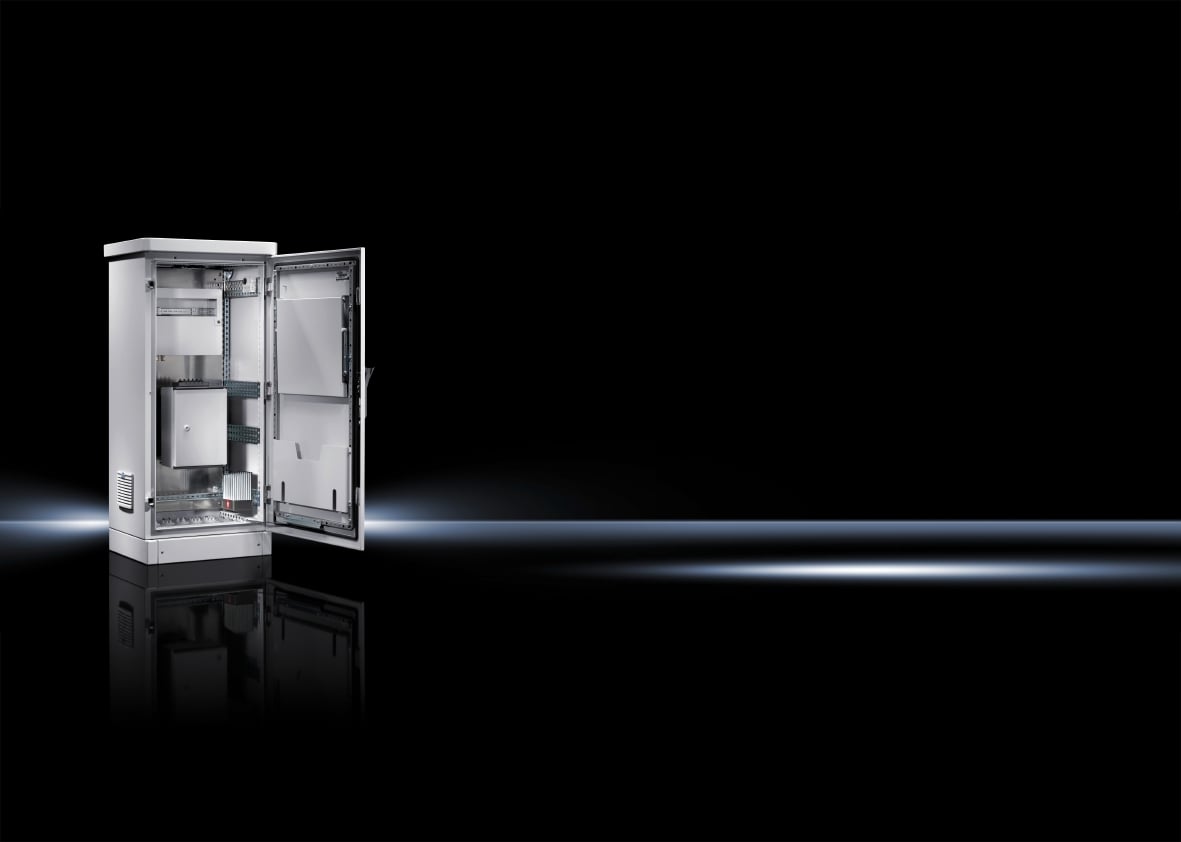
The Rittal CS Basic outdoor enclosure range is manufactured from aluminium with a UV-resistant powder-coated finish, providing corrosion resistance while maintaining a comparatively lightweight construction for handling and installation.
The range provides IP55 protection and incorporates an integrated rain canopy with projections on all sides to increase shading. All-round louvred ventilation supports natural airflow through the enclosure.
These characteristics make the platform applicable across electricity distribution, water and wastewater infrastructure, renewable energy installations, communications equipment, and remote monitoring and control systems.
Standardisation Without a Fixed Configuration
Distributed networks can involve dozens or even hundreds of field installations, making standardisation valuable for engineering, installation and maintenance.
However, standardising the enclosure does not necessarily mean every installation will contain the same equipment.
A communications installation may have very different internal requirements to a monitoring or control application. Equipment may also change as networks are upgraded or new technologies are introduced.
CS Basic addresses this through 25 mm system punchings throughout the enclosure. Mounting components and accessories can be positioned within the system while retaining compatibility with Rittal’s wider platform.
Adjustable mounting plates and optional 19-inch mounting angles provide further configuration options for different equipment layouts.
This allows a common enclosure platform to be used across different applications without requiring an identical internal configuration at every location.
Considering Installation from the Beginning
For infrastructure deployed across multiple or remote sites, enclosure design also needs to account for how equipment reaches the installation location.
CS Basic incorporates a transport plinth and integrated lifting points, assisting with handling and installation. The aluminium construction also contributes to a lower enclosure weight compared with heavier material alternatives.
These may appear to be relatively straightforward design details, but they become increasingly relevant when installations are repeated across distributed networks or when access to individual sites is constrained.
Planning for the Life of the Asset
Utility infrastructure is generally expected to remain operational for extended periods, during which equipment and network requirements may change.
An enclosure selected for the initial installation may later need to accommodate additional communications technology, monitoring equipment or control components. Internal configuration and compatibility with a broader system platform therefore become important considerations alongside environmental protection.
This is where a system-based approach can provide greater flexibility. Rather than treating the outdoor enclosure as an isolated component, engineers can consider its internal configuration, accessories, handling and future modification requirements during the initial design process.
Supporting Distributed Utility Networks
As electricity, water and renewable energy networks continue to expand, the number and variety of outdoor electrical installations are also likely to increase.
Selecting an outdoor enclosure therefore involves balancing environmental protection with installation requirements, internal configuration and the longer-term needs of the asset.
The Rittal CS Basic outdoor enclosure range combines powder-coated aluminium construction, IP55 protection, natural ventilation and flexible internal configuration within a platform designed for outdoor electrical infrastructure.
For utilities managing increasingly distributed networks, these characteristics provide a practical basis for developing consistent enclosure solutions while retaining flexibility across different field applications.
Explore Rittal’s complete range of outdoor enclosure solutions in the Rittal Outdoor System Solutions Brochure.
Download the Outdoor System Solutions Brochure → https://www.rittal.com/au-en/au/LandingPages/Rittal-Outdoor-Solutions-Brochure