
By Rittal on Oct 30, 2026, 2:51:00 AM
As communications networks become increasingly distributed, maintaining reliable operation during outages requires careful consideration of the infrastructure supporting them.
Across utilities, transport networks, public safety infrastructure and remote installations, communications equipment and control systems are often located outside conventional control rooms.
During a major outage, these systems may need to continue supporting monitoring, fault management, remote operations and network recovery. This places particular importance on the physical infrastructure protecting communications equipment, especially in outdoor and unmanned locations.
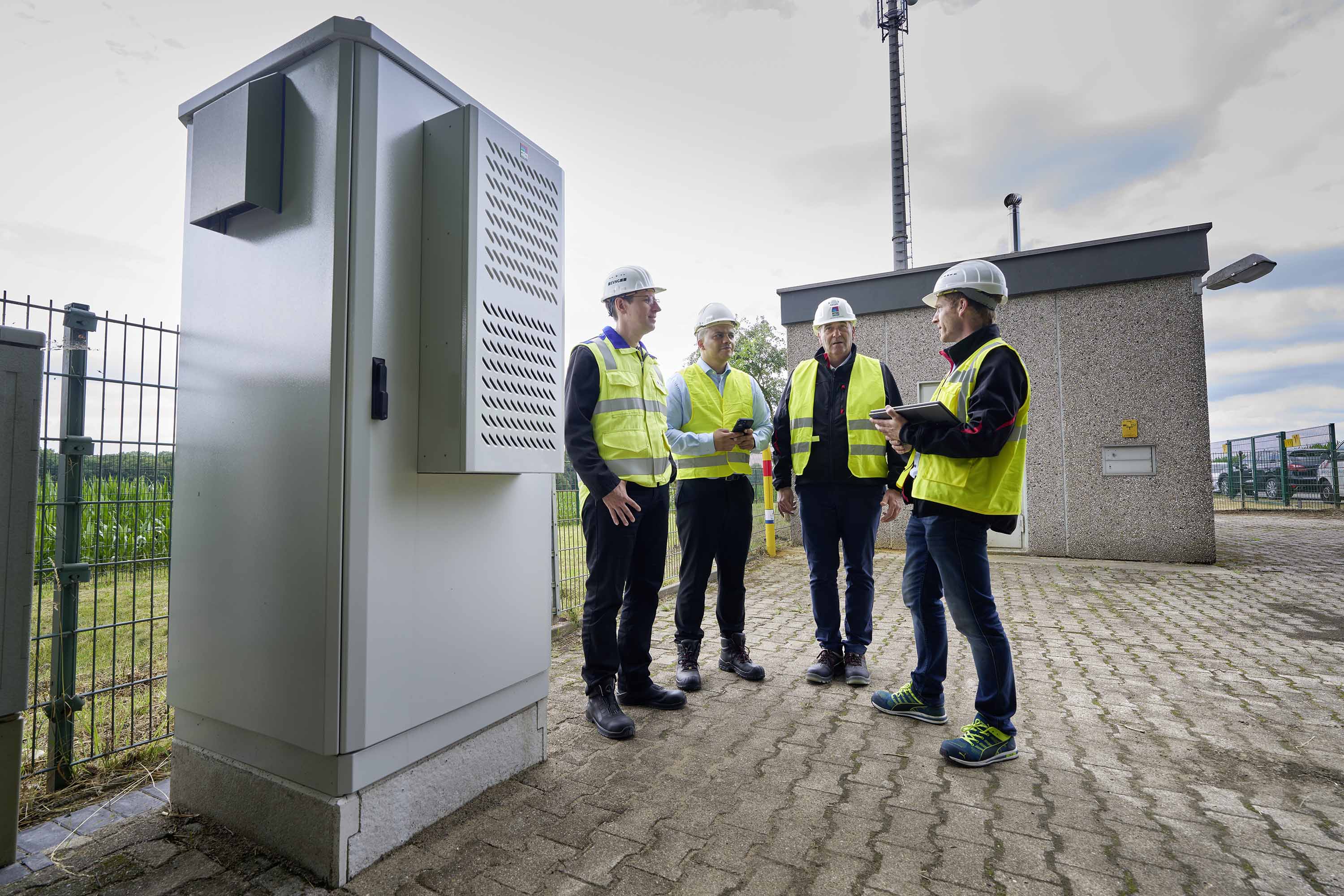
A recent project involving German utility ELE Verteilnetz GmbH (EVNG) demonstrates how outdoor enclosure systems can support the modernisation and resilience of distributed communications networks.
Modernising Communications Across 21 Sites
EVNG undertook a project to modernise 21 substations and gas pressure regulating stations, with the objective of maintaining communications and control systems for up to 72 hours during a blackout.
Many of the existing facilities were decades old and had not been designed to accommodate modern communications equipment, digital control systems or the battery capacity required for extended autonomous operation.
As Simon Bartoschewski, Team Leader Communication and Security Systems at EVNG, explained:
"We had to equip decades-old medium-voltage stations with digital modules and sufficient battery capacity to operate for 72 hours."
Rather than expanding the existing buildings, EVNG worked with Rittal and IT infrastructure provider Bechtle to accommodate the required communications equipment, networking hardware, UPS systems and battery storage in purpose-built outdoor enclosures.
This provided an alternative approach to integrating modern communications infrastructure into established utility sites.
Outdoor Enclosures for Critical Communications Equipment
Outdoor communications installations must accommodate electrical and electronic equipment while accounting for the environmental conditions at each location.
Rittal's CS Toptec bayable outdoor enclosure system provides a modular platform for applications requiring environmental protection, internal equipment integration and climate control.
The system incorporates several design features relevant to distributed communications infrastructure:
- Double-walled construction that creates a chimney effect to reduce the influence of solar radiation on the internal enclosure.
- Ingress protection against dust and water for outdoor electrical installations.
- Corrosion-resistant construction options for different environmental requirements.
- Integration with Blue e+ outdoor cooling units where active climate control is required.
- Bayable enclosure architecture that allows multiple sections to be combined for larger equipment configurations.
For the EVNG project, the deployment was standardised into six enclosure variants across the 21 locations.
This reduced the need for individual enclosure designs at every site while accommodating different equipment configurations and installation requirements.
Supporting Maintenance Across Distributed Networks
Beyond initial installation, maintaining communications infrastructure across multiple locations requires access to accurate equipment and project documentation.
Rittal's ePOCKET digital documentation platform provides access to enclosure-related documentation through a QR code, including wiring diagrams, schematics and service information.
For maintenance teams working across geographically distributed infrastructure, digital access to documentation can support servicing, troubleshooting and future modifications.
Combined with the modular construction of the CS Toptec system, this provides a consistent approach to enclosure configuration and documentation across multiple installations.
A System-Based Approach to Communications Resilience
The EVNG project illustrates how communications resilience involves more than providing sufficient backup power.
The electrical and communications equipment must also be accommodated within an enclosure system suited to its operating environment, thermal requirements and maintenance needs.
By combining outdoor enclosure infrastructure, climate control, equipment integration and standardised configurations, EVNG was able to modernise communications systems across existing utility facilities.
As Bartoschewski concluded:
"We didn't get just products from Rittal and Bechtle, but a ready-made solution."
For utilities, transport networks and other critical communications applications, the project provides an example of how modular outdoor enclosure systems can support the deployment of communications infrastructure across multiple sites.
Read the full EVNG case study:
https://betop.friedhelm-loh-group.com/innovation/powering-on-in-a-blackout.html
Explore Rittal Outdoor Infrastructure Solutions and download the brochure:
https://www.rittal.com/au-en/au/LandingPages/Rittal-Outdoor-Solutions-Brochure